
Interest Rate Predictions: Now and What Comes Next
Small business owners spend a lot of time discussing interest rate predictions. They hear the noise and spend their time speculating on what the Federal Reserve will do next. Here's what's happened this year, what it means for the cost of borrowing today, and what to watch for at the Fed's next meeting.
What actually happened at the last meeting
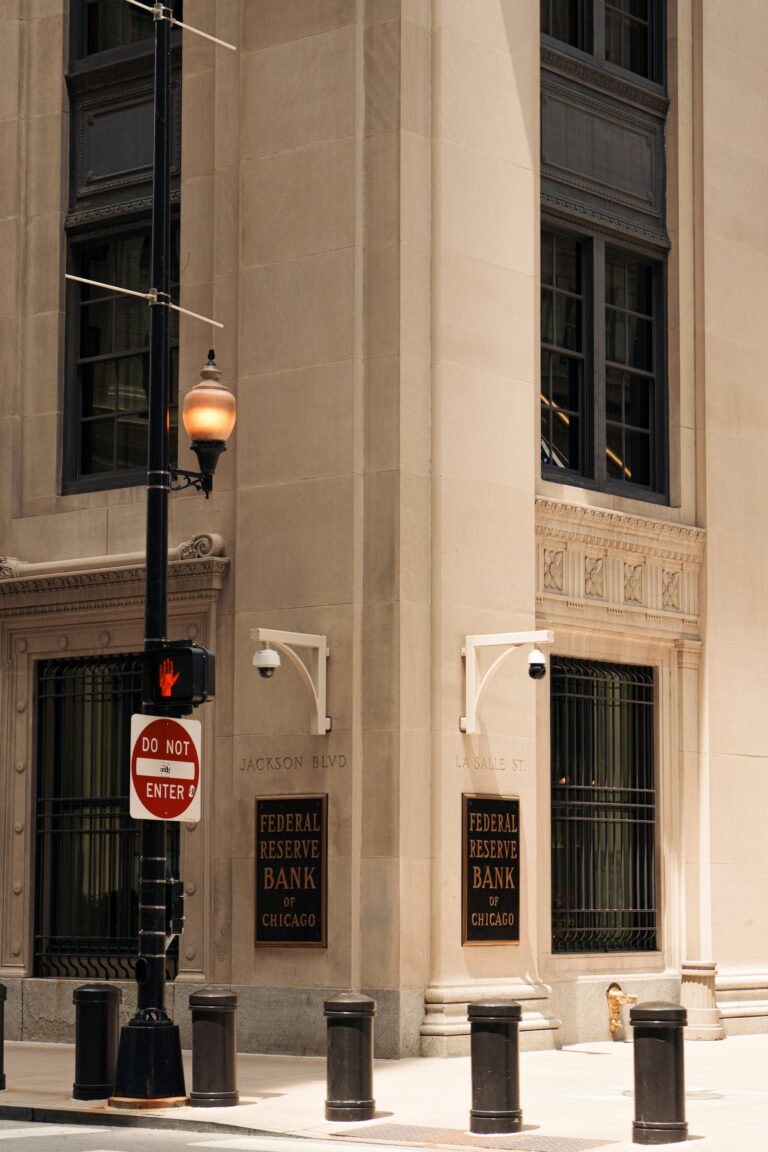
At its June 17, 2026 meeting — the first under new Federal Reserve Chair Kevin Warsh — the Federal Open Market Committee (FOMC) voted unanimously, 12–0, to hold the federal funds rate at its current target range of 3.50% to 3.75%. That range has been in place since cuts in late 2025, when the central bank lowered rates by three-quarters of a percentage point.
The rate decision itself wasn't the news. What moved markets was the shift in tone. The Fed's post-meeting statement removed language that had previously signaled a bias toward future rate cuts. It was also shorter and more direct than prior statements. Warsh described this change in his press conference as giving "just the facts, as best we can judge it."
The Fed's updated economic projections (the "dot plot"), released alongside the June decision, told a more concrete story. The median projected federal funds rate for year-end 2026 rose to 3.8% up from 3.4% in the prior projections issued in March. At least one rate hike is now considered likely by the committee as a whole, if not a certainty of continued cuts.
Committee members were split on the decision. Of 18 responses, eight expected no change through year-end, nine anticipated at least one hike, and one expected a cut. Inflation projections were revised upward as well. The Fed projects headline PCE inflation at 3.6% for 2026 and core PCE (which excludes food and energy) at 3.3%, both higher than earlier estimates.
Why the shift
The Fed's dual mandate — maximum employment and price stability — requires balancing two goals that can pull in opposite directions. When unemployment is elevated, the Fed favors lower rates to encourage borrowing and hiring. When inflation is running hot, it favors higher rates to cool demand. According to the Fed's June projections, officials are currently weighing inflationary pressures. This is attributed to price spikes due to geopolitical disruption against an economy that, by other measures, has continued to show resilience.
Interest rate predictions: What's coming next
The next FOMC meeting is scheduled for the end of July. As of early this month, the market pricing reflected in CME FedWatch data and the prediction markets tracking Fed decisions put the probability of a hold at that meeting in the 60–75% range. The meaningful minority pricing is in a quarter-point hike. Some forecasters have broken from consensus entirely: Bank of America, for instance, revised its outlook to project three rate hikes before the end of 2026, a notably more hawkish call than the broader market consensus. The through-line across most forecasts, hawkish or not, is agreement that a return to the ultra-low rates of the pre-2022 period is not imminent. Keen insight from the debate indicates the pace for further tightening, not whether cuts are coming soon.
What this means for the cost of business borrowing right now
The federal funds rate doesn't set your loan rate directly, but it anchors the prime rate, which does. With the effective federal funds rate running close to 3.64% as of early July, the prime rate has been sitting around 6.75%.
For SBA 7(a) loans specifically, current pricing runs roughly 9%–11.5% APR depending on loan size, structure, and lender, according to recent SBA rate tracking. SBA Express loans, which cap at $500,000, carry higher maximum rate spreads: up to Prime + 4.5% (roughly 11.25% APR) on loans over $50,000, and up to Prime + 6.5% (roughly 13.25% APR) on loans of $50,000 or less. Most Express working capital loans carry variable rates; Express loans secured by equipment more commonly carry fixed rates. Those same rate dynamics can affect mortgage rates, commercial real estate financing, and other forms of credit.
The practical comparison that matters for most borrowers: an SBA loan in the 9–12% range is still meaningfully cheaper than most online or alternative lending options, which commonly run 18–30% APR for comparable risk profiles. The SBA route costs more in fees (typically 4–8% in guaranty and lender fees combined) and takes considerably longer to close. Generally 45 to 75 days is typical for 7(a). The timeline is longer for 504, but the rate spread alone often justifies the wait for larger, longer-term financing needs.
The practical takeaway
If you're carrying a variable-rate SBA loan, investing in fixed-income securities, or weighing whether to lock in financing now versus waiting for a possible rate cut: the Fed's own communications this year point toward "higher for longer," not toward imminent relief. Waiting for a rate cut carries its own opportunity cost, especially if your business has a time-sensitive growth need. If a fixed-rate structure is available to you and the numbers work at today's rates, that's worth weighing seriously. The odds are betting on a rate environment that current Fed communication doesn't support. Business owners balancing their personal financial goals with company growth should remain abreast of the latest developments while focusing on cash flow, borrowing capacity, and business needs. Rather than focusing on interest rate predictions, focus on making your business durable in any market.

Sign up for the latest news and financial tips
Ready to start growing your business?
- Human expertise
- Transparent technology
- Cybersecurity
- Efficient collaboration
- Various loan types
- Easy application
